
Best Brake Pads for Subaru WRX
When it comes to enhancing your Subaru WRX's performance, upgrading your brake pads is one of the most critical modifications you can make. Whether you're hitting the track, navigating winding mountain roads, or simply want better stopping power for daily driving, the right brake pads can transform your driving experience while ensuring your safety.

Table of Contents
When it comes to enhancing your Subaru WRX's performance, upgrading your brake pads is one of the most critical modifications you can make. Whether you're hitting the track, navigating winding mountain roads, or simply want better stopping power for daily driving, the right brake pads can transform your driving experience while ensuring your safety.
Your WRX's factory brake pads are designed for general use, but they often fall short when you're pushing your car to its limits. Performance brake pads offer superior heat dissipation, reduced brake fade, and improved pedal feel, giving you the confidence to brake later and harder than ever before.
🏆 Best Overall Performance
After extensive testing and research, we identified pads that best balance street comfort, confident bite, and heat stability for the Subaru WRX.
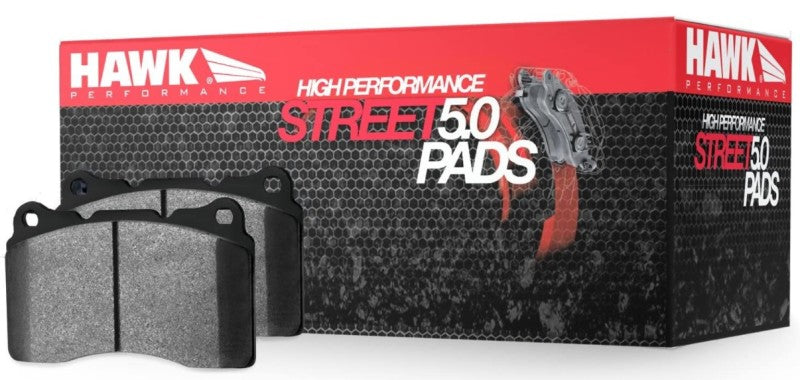
Hawk HPS 5.0 Brake Pads
- Linear pedal feel with stronger-than-OEM initial bite
- Broad street temperature range; light fade resistance
- Low dust/noise and rotor-friendly wear
Hawk HPS 5.0 is the do‑it‑all choice for WRX owners who split time between commuting and spirited canyon runs. It adds a noticeable bump in initial bite and mid‑pedal support without the squeal or dust of aggressive compounds. The broad operating window means performance stays consistent from cold starts in city traffic to repeated downhill braking, and the rotor-friendly formula keeps maintenance costs reasonable over long mileage.
🏙️ Best for Street Performance
For drivers prioritizing clean wheels, quiet operation, and a sportier street feel, these pads elevate confidence without the harshness of track compounds.

EBC Redstuff (Ceramic)
- Significantly reduced brake dust for cleaner wheels
- Improved initial bite vs. OEM with smooth response
- Quiet operation thanks to damping shims
Redstuff sharpens response without sacrificing refinement. The ceramic blend keeps rims noticeably cleaner than stock pads while delivering a firmer, more immediate pedal. Noise control is excellent after bedding, making it ideal for daily drivers who want a premium feel, tidy wheels, and a touch of sport without the cold‑stop harshness of race‑leaning compounds.
🏁 Best for Track Use
When heat and repeatability matter most, these compounds offer stable friction and predictable torque for HPDE and time‑attack days.
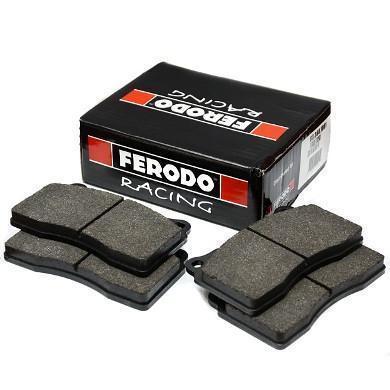
Ferodo DS2500 (light/medium track)
- Excellent modulation with consistent friction
- Strong fade resistance for HPDE/autocross
- Usable cold bite for street transfers
DS2500 is the classic bridge pad—docile enough to drive to the track, yet composed under repeated high‑energy stops. The pedal is easy to meter, making threshold braking predictable as tires load and unload. While not a full race pad, its fade resistance comfortably covers light to medium HPDE work and aggressive canyon descents when paired with quality fluid and proper bedding.
💰 Best Budget Option
Looking for a noticeable upgrade without overspending? These deliver cleaner, quieter braking and dependable stopping power.
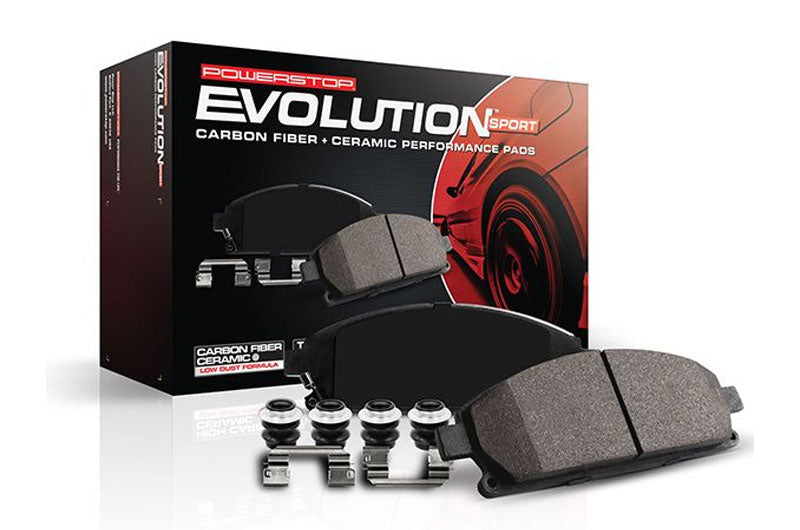
Power Stop Z23 Evolution Sport
- Affordable upgrade with stronger bite than OEM
- Low dust and low noise
- Rotor‑friendly ceramic formula
Z23 delivers the “OE‑plus” experience on a budget. The pedal feels firmer and more responsive than stock, and dust output is kept in check for easy wheel care. Installation is straightforward thanks to included shims and chamfers, making it a smart, cost‑effective refresh for high‑mileage WRX daily drivers.
🚗 Best for Daily Driving
For city traffic and highway miles, these pads focus on quietness, smooth response, and long service life.
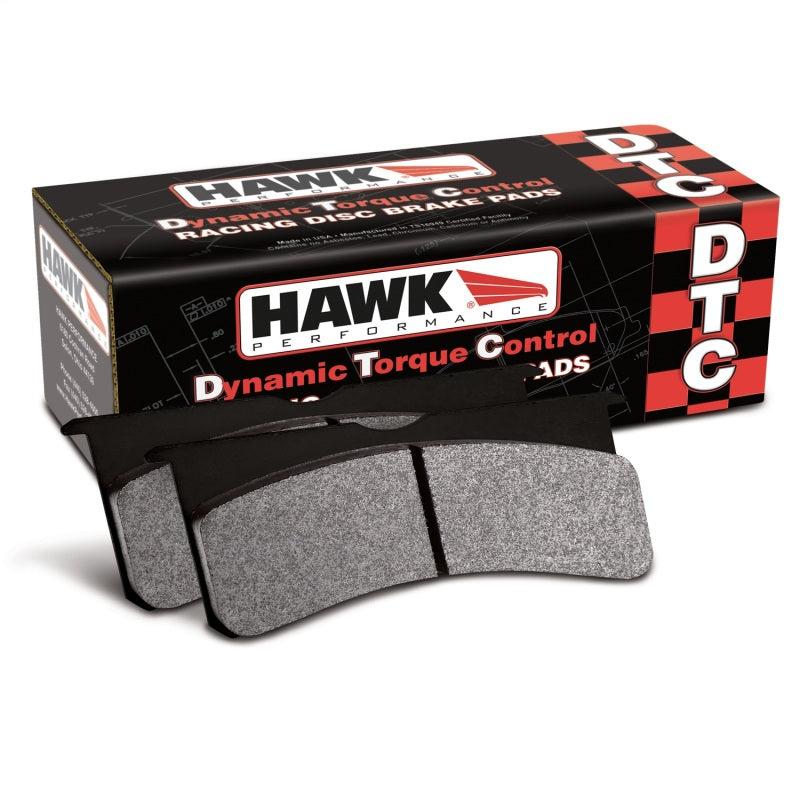
Brembo Ceramic/NAO Street
- Quiet operation with premium shims
- Smooth, predictable bite in stop‑and‑go traffic
- Low rotor wear with stable performance across temps
Brembo’s street compound brings a composed, upscale feel to everyday driving. Engagement is smooth and progressive, so the car settles without nose‑dip in traffic. The pads tolerate temperature swings well and are gentle on rotors, helping keep braking consistent over tens of thousands of miles.
📖 Complete Buying Guide
🔧 Compatibility Check — Subaru WRX
Before purchasing brake pads, it's crucial to verify compatibility with your specific WRX model and year. Different generations use different brake systems:
2002–2005 WRX
GD (early)Sliding 2‑piston caliper; approx. 294×24 mm vented rotor
Sliding 1‑piston caliper; approx. 266×10 mm solid rotor
2006–2007 WRX
GD (late)Fixed 4‑piston “Subaru 4‑pot”; approx. 294×24 mm vented rotor
Fixed 2‑piston “Subaru 2‑pot”; approx. 290×18 mm vented rotor
2008–2014 WRX
GE/GH/GR/GVSliding 2‑piston caliper; approx. 294×24 mm vented rotor
Sliding 1‑piston caliper; approx. 286×10 mm solid rotor
2015–2021 WRX
VASliding 2‑piston caliper; approx. 316×30 mm vented rotor
Sliding 1‑piston caliper; approx. 286×10 mm solid rotor
2022+ WRX
VBSliding 2‑piston caliper; approx. 316×30 mm vented rotor
Sliding 1‑piston caliper; approx. 286×10 mm solid rotor
Tips
Always confirm by VIN or OE part number and FMSI pad shape code before purchasing.
If your WRX has retrofitted calipers (e.g., Subaru 4‑pot/2‑pot), order pads for the installed calipers, not the original model year.
🌡️ Understanding Brake Pad Compounds
- Organic/NAO: Quiet and rotor‑friendly with smooth initial bite; lower heat capacity and fade resistance; best for daily commuting and light-duty driving.
- Semi‑metallic: Strong bite and excellent high‑temperature stability with better heat dissipation; typically more noise and brake dust, and can wear rotors faster; cold performance varies by formulation.
- Ceramic: Low dust and low noise with consistent friction in street temperatures; not a replacement for true track pads at very high temps.
- Racing/Track pads: Engineered for high heat and repeated heavy braking; poor cold bite, noisy, very dusty, and harsh on rotors; not recommended for street use.
- Copper regulations: Many regions require low‑copper or copper‑free pads, influencing formulations but not the core pros/cons above.
- Wear indicators: Some pads include mechanical or electronic wear sensors—verify compatibility and correct placement during installation.
🔨 Installation Tips
While brake pad installation can be a DIY project, we recommend professional installation for safety reasons. If you're doing it yourself:
- Replace in axle pairs: Always replace pads on both sides of the same axle; check rotor minimum thickness, runout, and DTV against manufacturer specs; inspect hardware.
- Clean and lubricate: Clean caliper brackets/rails; lubricate slide pins and pad contact points with non‑petroleum, high‑temp brake grease; keep friction surfaces oil‑free.
- Retract pistons and fluid: Manage brake fluid level when pushing pistons back; open the bleeder and capture fluid if possible to avoid sending dirty fluid to the master cylinder.
- EPB vehicles: Enter service mode before retracting rear calipers on electronic parking brake systems; follow the vehicle service manual.
- Hardware and torque: Replace included shims/clips/boots; torque caliper bolts and wheel lug nuts to spec; verify pad orientation and sensor placement; pump the pedal until firm.
- Bed‑in procedure: Follow the pad maker’s instructions—progressive medium‑to‑hard stops without coming to a full stop, then a cool‑down drive.
🧽 Maintenance and Care
Proper maintenance extends brake pad life and ensures optimal performance:
- Inspection interval: Inspect brakes every 10,000–20,000 miles (or at oil changes); increase frequency for spirited or track driving.
- Replacement thresholds: Replace pads at ≤3 mm friction material; replace rotors if below minimum thickness or if runout/DTV exceeds spec.
- Brake fluid: Replace every ~2 years for street use (DOT 3/4/5.1 per manufacturer); every 6–12 months or after events for frequent track use.
- Cleanliness and lubrication: Keep wheels and calipers clean to reduce corrosive dust; ensure slide pins move freely and boots remain intact.
- Driving habits: Avoid riding the brakes; after hard driving, cruise gently to cool brakes; avoid holding the pedal firmly at a stop with hot rotors to prevent pad imprinting.
- Warning signs: Address squeal, grinding, pulling, pedal changes, or steering wheel vibration promptly.
🛞 Tires: The Other Half of Braking
Want to unlock the full benefit of your brake upgrade? Don’t overlook how tire grip sets the ceiling for stopping distance. Check out Best Tires for WRX to choose the right rubber for your driving.
❓ Frequently Asked Questions
Q: How often should I replace my WRX brake pads?
Typically every 25,000-50,000 miles for street driving, but this varies greatly based on driving style, pad compound, and conditions. Performance pads may wear faster but offer better stopping power. Always inspect pads regularly and replace when they reach the minimum thickness.
Q: Can I mix different brake pad brands front and rear?
While not recommended, it's possible. However, using the same brand and compatible compounds front and rear ensures balanced braking performance. Different compounds can affect brake bias and pedal feel.
Q: Do I need to replace rotors when installing new brake pads?
Not necessarily. If your rotors are within thickness specifications, not warped, and have minimal scoring, they can be reused. However, new pads often perform best with fresh or resurfaced rotors.
Q: What's the break-in procedure for new brake pads?
Most performance pads require a bedding process: 6-10 moderate stops from 35-40 mph, followed by 2-3 harder stops from 45-50 mph, then allow brakes to cool. Always follow the manufacturer's specific bedding instructions.
Q: Why do some brake pads cost so much more than others?
Price differences reflect compound technology, manufacturing processes, research and development costs, and performance characteristics. Racing compounds require exotic materials and extensive testing, justifying higher prices.