
Best Tires for WRX
Looking for the best tires for your Subaru WRX? Tires are the most impactful upgrade to how your WRX accelerates, turns, and stops—often more than most bolt‑ons. Whether you carve mountain roads, commute through heavy rain, or chase PBs at HPDE, the right Subaru WRX tires deliver sharper turn‑in, shorter braking distances, and lap‑to‑lap consistency.

Table of Contents
Looking for the best tires for your Subaru WRX? Tires are the most impactful upgrade to how your WRX accelerates, turns, and stops—often more than most bolt‑ons. Whether you carve mountain roads, commute through heavy rain, or chase PBs at HPDE, the right Subaru WRX tires deliver sharper turn‑in, shorter braking distances, and lap‑to‑lap consistency.
In this guide to the best tires for the Subaru WRX, we showcase proven options from brands in our catalog—Toyo, Yokohama Tire, Pirelli, and Mickey Thompson—organized by real‑world use: Daily/All‑Season & All‑Weather, Summer Performance, Heavy Rain, Winter/Snow, Budget, and Track/200TW. Each recommendation includes a 2002–2025 fitment summary and setup tips; size guidance is outlined in the Size & Fitment section.
🏆 Best Overall Performance
Our Best Overall tire is the sweet spot for drivers who want a responsive daily setup that still inspires confidence in the wet. If you’re after a single set of Subaru WRX tires for warm‑weather street use—lively steering, predictable breakaway, and strong wet braking—this is the category to start with.

Yokohama ADVAN Apex V601
- Clear feedback and stable mid‑corner support for predictable limit behavior
- Strong wet‑road stopping and resistance to early hydroplaning for its class
- Street‑friendly ride/noise while keeping a performance‑first feel
- Holds consistency on spirited mountain runs; not intended for repeated HPDE lapping
🍂 All‑Season / All‑Weather
Live with big temperature swings or frequent cold rain? UHP all‑season and all‑weather compounds keep steering response and braking confidence when summer tires go glassy. For one‑set convenience on a daily‑driven WRX, these Subaru WRX tires balance year‑round traction, wet braking, and a civilized ride. If you see regular snow or ice, jump to the Winter/Snow section.

Yokohama ADVAN Sport A/S+
- Better cold‑temperature grip and wet braking than summer tires
- Balanced ride/noise for daily use without dulling the WRX’s steering feel
- Handles spirited street driving; not aimed at sustained track heat
☀️ Summer Performance
For warm months and performance driving, summer performance tires deliver higher lateral grip, shorter dry stopping, and a crisper on‑center feel. If your priority is responsive handling on back roads or canyon runs, these WRX tire choices trade some treadlife and cold flexibility for confident dry and damp performance.

Toyo Proxes Sport
- Silica‑rich compound supports dependable wet braking and stability
- Sporty steering feel and reassuring mid‑corner support
- Shorter treadlife than UHP all‑season alternatives under aggressive use
🌧️ Heavy Rain
Daily drive through storms or standing water? Prioritize wet‑grip compounds and directional tread that evacuates efficiently. These Subaru WRX tire options aim for shorter wet stopping and calmer behavior in downpours, trading a touch of ultimate dry grip for hydroplaning resistance and confidence.
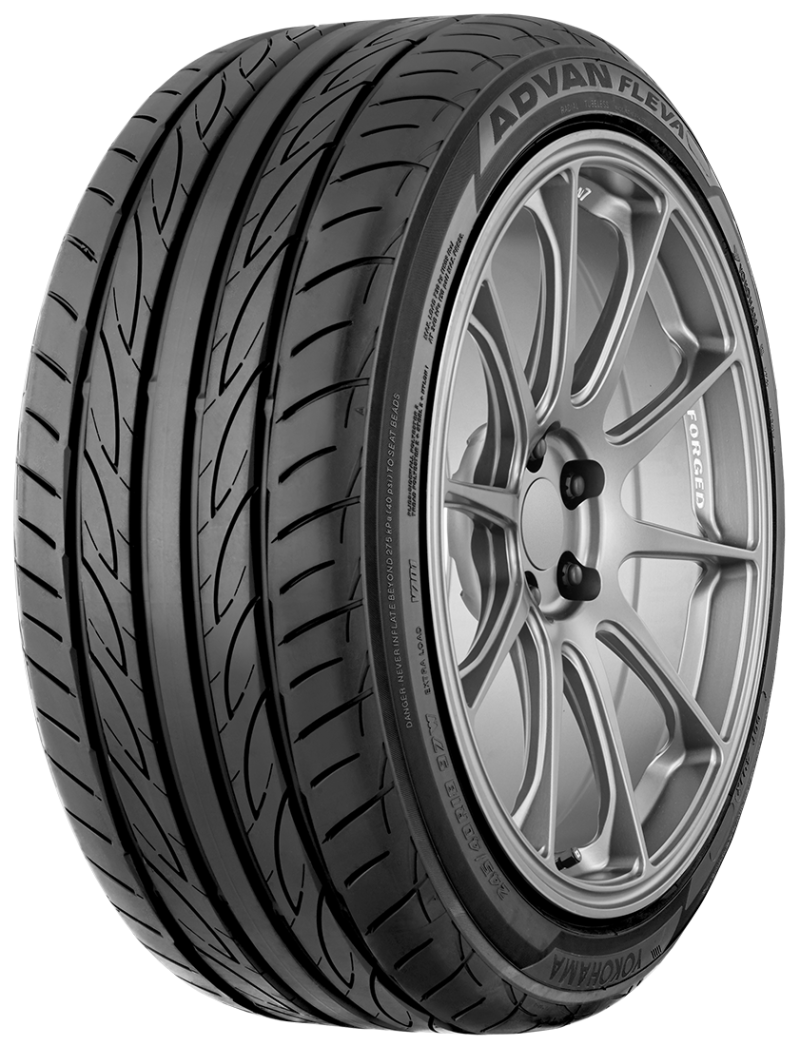
Yokohama ADVAN Fleva V701
- Confident wet braking and traction in heavy rain and cool temps
- Predictable, progressive breakaway in the wet for easy car control
- Dry limits trail top max‑summer options, but daily confidence rises
❄️ Winter/Snow
AWD helps you launch; winter‑friendly compounds help you stop and turn when the temperature drops. If your winters are mostly cold rain, frosty mornings, and occasional light snow, an all‑weather tire is a practical one‑set solution. These winter tires for WRX daily drivers keep steering feel sharper than deep‑snow studless options while maintaining cold‑wet security.

Toyo Celsius Tire
- Cold‑weather compound maintains grip below 45°F for safer braking and turning
- Dense siping aids traction in light snow and slush—ideal for mixed winter commuting
- More precise steering than deep‑snow studless designs, with daily‑friendly ride/noise
- Not intended for severe ice or heavy, persistent snowfall—use dedicated winter tires if that’s your climate
💰 Budget Options
Chasing value shouldn’t compromise safety. These budget Subaru WRX tire picks balance price with dependable wet braking and predictable handling. They’re great for commuting and light spirited use, but set clear expectations for heat and track work.

Toyo Proxes Sport A/S
- Balanced dry/wet performance with dependable cold‑weather manners
- Comfortable ride and reasonable road noise for daily duty
- Not designed for sustained lapping—heat can accelerate wear
🏁 Track / 200TW
If cutting seconds matters, extreme‑performance 200TW Subaru WRX tires deliver higher peak grip and quicker warm‑up for HPDE and time trials. They demand negative camber and careful pressure management to protect the outer shoulders. Wet performance is limited—always bring a rain plan.

Yokohama ADVAN A052
- Time‑attack pace with consistent lap‑to‑lap performance when managed
- Responds well to additional negative camber; protects outer shoulders on WRX
- Limited standing‑water capability—reduce speed in heavy rain
- Shorter heat‑cycle life vs. road‑biased tires; rotate and store carefully

Mickey Thompson ET Street S/S
- Street‑legal compound optimized for hard launches and quick 60‑ft
- Best as a secondary set for drag events and roll‑racing
- Not suited to heavy rain or extended cornering loads
📖 How to Choose Tires for a WRX
Choosing the best tires for WRX comes down to climate, driving style, and how much you value steering feel versus all‑weather security. Start with the tire type that matches your use case, then pick WRX tire sizes that your alignment can support.
- Tire types: Max Performance Summer (warm‑weather grip and sharp steering), UHP All‑Season/All‑Weather (broader temps with sporty manners), All‑Weather like Celsius (cold‑wet and light snow in one set), Extreme‑Performance 200TW (street/HPDE focus), Drag‑biased street (specialized straight‑line traction).
- Priorities: Dry grip/turn‑in, wet braking and hydroplaning resistance, heat consistency, ride/noise, and value.
- WRX tips: Rotate every 5–6k miles (AWD), use negative camber to protect outer shoulders on 245–265 widths, and keep toe near zero for stability and treadlife.
🧩 Size & Fitment — Subaru WRX (By Year)
Picking the right WRX tire size affects clearance, ride quality, and alignment needs. 245/40R18 is the most popular upgrade; 255/35R18 offers more grip but typically needs additional camber and careful offset selection.
- 2022+ WRX (VB): Popular 245/40R18. 255/35R18 with ~−1.5° camber and appropriate offset; 265/35R18 requires aggressive fitment. Wheels: 18×8.5–9.5 (245), 18×9–9.5 (255). Check BBK spoke clearance.
- 2015–2021 WRX (VA): Stock 235/45R17 or 235/40R18. 245/40R18 widely used; 255/35R18 depends on offset/camber and ride height. Minor liner tweaks may be needed on lowered cars.
- 2008–2014 WRX (GE/GH/GR/GV): Stock around 225/45R17. Common upgrades: 235/40R18 or 245/40R18 with the right offset and suspension setup.
- 2002–2007 WRX (GD): Stock 16/17". Moving to 17/18" requires checking fender and caliper clearance.
Tip: Wider tires (255/265) add grip but can increase tramlining and fuel use. Support them with camber and careful toe settings.
🛠️ Alignment, Pressure & Break‑in
Setup matters. Correct pressures and alignment unlock grip, even wear, and better feedback from any Subaru WRX tire—street or 200TW track rubber.
- Street cold pressures: ~35–36 psi; adjust for load and temperature swings.
- Track starting point: ~34 psi front / 32 psi rear cold; manage to ~38–40 psi hot based on shoulder wear and feel.
- Camber: Street −1.0° to −1.5°; HPDE −1.5° to −2.5° front for more even temps.
- Break‑in: 50–100 miles of gentle driving; avoid hard braking/overheating when new.
- Rotation: Every 5–6k miles (or sooner with spirited use) using a cross‑pattern on AWD.
❓ Frequently Asked Questions
Q: Can 255‑width tires fit a stock WRX without rubbing?
Often yes with the right offset and about −1.5° camber; results vary by ride height and liner clearance. 245/40R18 remains the safest, most popular upgrade.
Q: Do I still need winter‑capable tires on an AWD WRX?
Yes. AWD helps you go, but braking and turning in cold/snow rely on cold‑weather compound and siping. Use all‑weather or dedicated winter tires for real winter conditions.
Q: What pressures should I start with for HPDE?
Start around 34 psi front / 32 psi rear cold and manage to 38–40 psi hot. Adjust based on shoulder wear, feel, and ambient temps.
Q: Are 200TW tires OK to daily?
In warm/dry conditions, yes. Expect more noise, faster wear, and limited standing‑water performance compared to road‑biased tires.
Q: 245/40R18 vs. 255/35R18 on WRX?
255/35 offers more grip and quicker response but needs alignment/offset care and sacrifices some comfort. 245/40 balances clearance, comfort, and performance.